



Follow this 3-day itinerary through northern Akita to discover Oga Peninsula, Unshoji Temple, authentic local experiences, and the UNESCO-listed landscapes of Shirakami Sanchi.
Discover one of Japan's most rewarding summer road trips.
Travel along the rugged coastline of the Sea of Japan, wander through a temple covered in blue hydrangeas, meet Akita dogs, taste local specialties, and explore the ancient beech forests of Shirakami Sanchi. This four-day itinerary takes you beyond Japan's famous tourist routes and into a region where nature, tradition, and local culture remain deeply connected.
Why Choose This Road Trip?
Japan's Golden Route is famous for its bustling cities and iconic landmarks, but northern Akita offers a completely different side of the country.
Instead of crowds and busy sightseeing schedules, you'll discover quiet fishing villages, dramatic coastal scenery, peaceful forests, and local traditions that have been preserved for generations.
Over four days, you'll travel north from Akita City along the Sea of Japan, stopping at places where every season tells a different story. One day you may be walking beneath thousands of blue hydrangeas overlooking the ocean. The next, you'll be harvesting junsai, a delicate aquatic vegetable prized in traditional Japanese cuisine, before spending the evening in a historic timber town. The journey ends among the ancient forests and crystal-clear lakes surrounding Shirakami Sanchi, one of Japan's two UNESCO World Natural Heritage Sites.
Rather than rushing from one famous attraction to another, this itinerary encourages you to slow down, spend time outdoors, and experience everyday life in rural Japan.
Trip at a Glance
Over View
| Duration | 4 Days / 3 Nights
| Best Time | Mid-June to Early July
| Start | Akita City
| Finish | Shirakami Sanchi (continue to Aomori if desired)
| Transportation | Rental car recommended
| Driving Time | Approximately 2 hours per day
| Ideal For | Nature lovers, photographers, onsen enthusiasts, and slow travelers
Best Time to Visit
This itinerary is designed for early summer, from mid-June to early July.
During this period:
・Unshoji Temple's hydrangeas are in bloom.
・Fresh greenery covers the forests of Shirakami Sanchi.
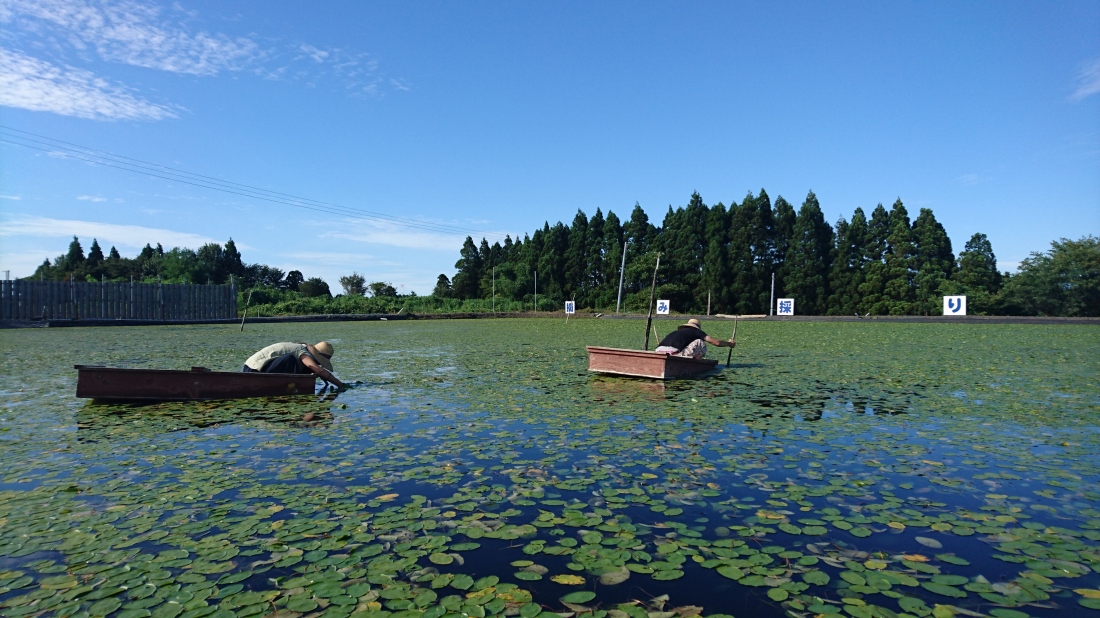
・Junsai harvesting season is underway in Mitane Town.
・Long daylight hours make coastal drives especially enjoyable.
・Clear evenings often bring spectacular sunsets over the Sea of Japan.
If your schedule allows, try to stay until sunset each day. Some of the most memorable views on this journey appear after most visitors have already left.
Before You Go
Transportation
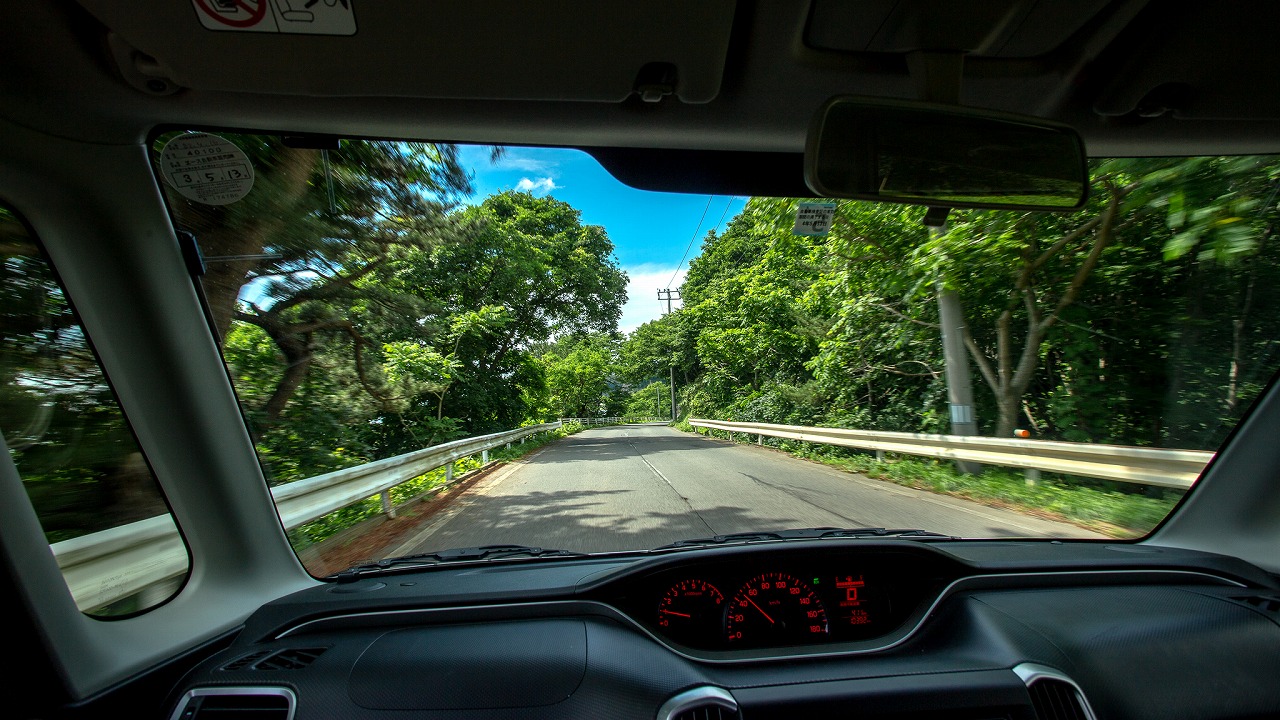
Many of Oga Peninsula's attractions are spread out along the coast, so having a car is the easiest way to explore the area.
If you're not driving, don't worry. Local buses and seasonal sightseeing shuttle taxis connect many of the major attractions. Another enjoyable option is to rent an e-bike from Oga Jitensha, located next to Oga Station. Cycling along the coastline at your own pace is a fantastic way to experience Oga's scenery and sea breeze.
By car: about 50 minutes from Akita City (approximately 40 km)
By train: about 1 hour on the JR Oga Line from Akita Station

What to Bring
・Comfortable walking shoes
・A light jacket for cooler evenings
・Sun protection
・Cash for small local shops
・A camera—this region is remarkably photogenic
Play-Date-with-Akita-Dogs-8.jpg)
Reservations
Some experiences require advance booking, including:
・Junsai harvesting
・Akita dog experiences
・Guided walks in Tomeyama Forest
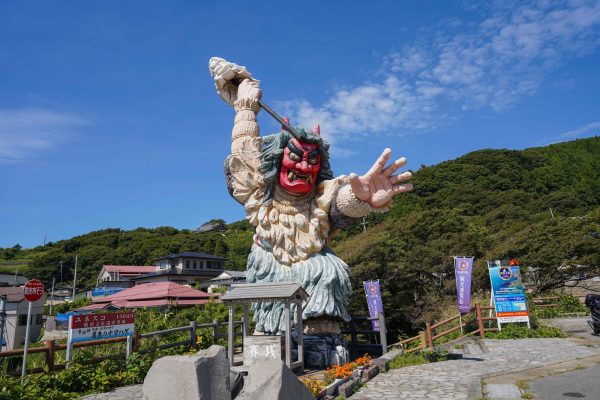
DAY 1
Your journey begins in Akita City before heading northwest toward the Oga Peninsula.
Surrounded by the Sea of Japan on three sides, Oga is known for its rugged coastline, dramatic sunsets, and the centuries-old Namahage tradition. While many visitors come for the famous hydrangeas of Unshoji Temple, the peninsula rewards those who spend an entire day exploring its scenic roads, shrines, fishing villages, and coastal viewpoints.
Take your time today. The slower you travel, the more you'll discover.
Driving Time

Approximately 50 minutes from Akita City to Oga City.
Oga Station
Before exploring the peninsula, take a short break around Oga Station.
The nearby roadside station offers local specialties and souvenirs, making it a convenient place to pick up regional products before continuing your drive.
If you're in the mood for coffee, TOMOSU CAFE has become a favorite among both locals and visitors. For something more substantial, many travelers make a stop at Fukushima Meat Shop, whose croquettes have earned an enthusiastic local following.
Unshoji Temple
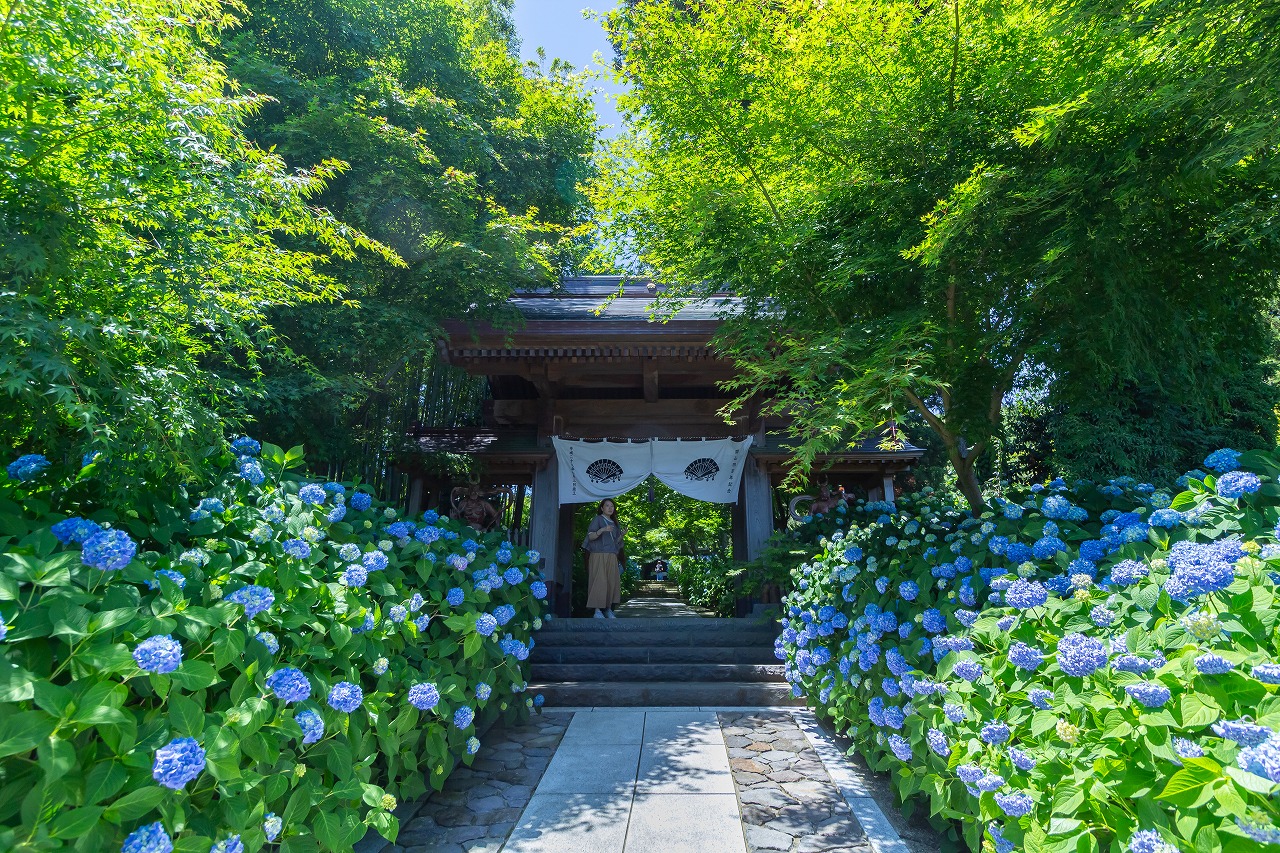
The highlight of early summer in Oga is undoubtedly Unshoji Temple.
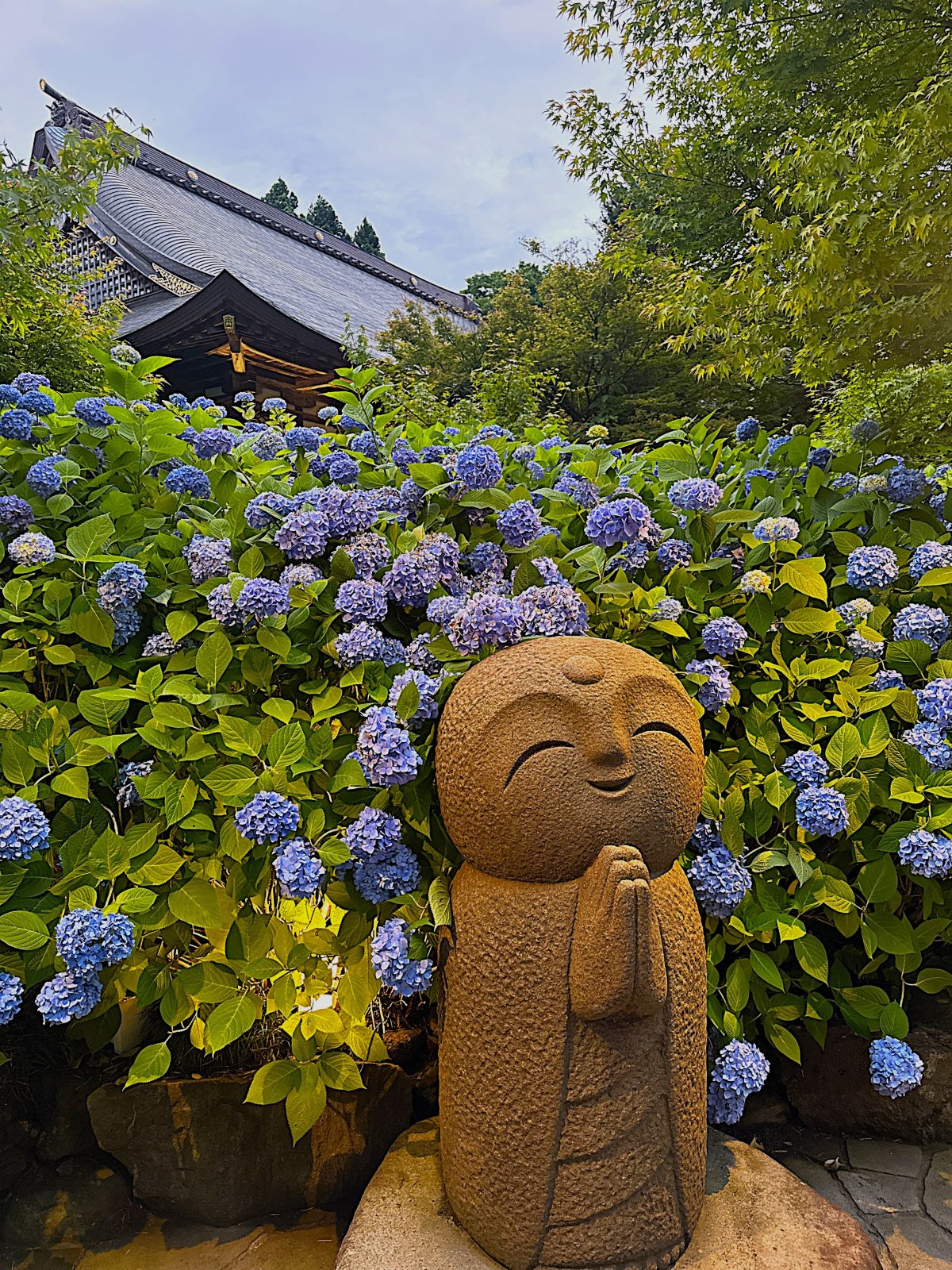
Every year from mid-June to mid-July, around 2,000 hydrangea bushes bloom across the temple grounds, transforming the hillside into a sea of brilliant blue flowers. The combination of traditional temple buildings, colorful blossoms, and sweeping views of the Sea of Japan creates one of Akita's most iconic seasonal landscapes.
Unlike many famous flower destinations in Japan, Unshoji feels remarkably peaceful. Visitors can take their time walking through the temple grounds, appreciating how the flowers change in color and appearance as the light shifts throughout the day.
During the hydrangea season, you'll also find exclusive seasonal souvenirs, hydrangea-themed charms, special drinks, and the temple's popular limited-edition shaved ice dessert sold near the entrance.
Unshoji Temple
Best season: Mid-June to Mid-July
Allow 60–90 minutes for your visit.
Visit in the late afternoon for softer light and
fewer visitors.
Akagami Shrine Goshado
Hidden within a cedar forest, five historic shrine buildings stand quietly along the mountainside. Reaching them requires climbing 999 stone steps, a journey closely connected to one of Oga's best-known Namahage legends.
Whether you're interested in local folklore or simply enjoy peaceful forest walks, this is one of the peninsula's most atmospheric destinations.
Namahage Museum
To better understand Oga's unique culture, stop by the Namahage Museum.
More than 150 traditional Namahage masks from villages across the peninsula are displayed here, along with exhibits explaining the history and customs behind this important New Year tradition.
Next door, the Shinzan Folklore Museum regularly presents demonstrations of the Namahage ritual, offering visitors a chance to experience this centuries-old cultural tradition.
Nyudozaki Cape
At the northern tip of the peninsula lies Nyudozaki, where rolling grasslands meet the deep blue Sea of Japan.
Climb the striped lighthouse for panoramic coastal views, browse the local seafood restaurants and souvenir shops, or simply enjoy the feeling of standing at the edge of northern Honshu.
Nyudozaki is also one of the peninsula's best places to experience the powerful scenery of the Sea of Japan.
Mount Kanpu
If the weather is clear, finish your sightseeing with a visit to Mount Kanpu.
Its rotating observatory offers spectacular 360-degree views across the Oga Peninsula, Hachirogata Lagoon, and the Sea of Japan, making it one of the region's finest viewpoints.
End the Day with Sunset
If the skies remain clear, don't rush back to your hotel.
Oga Peninsula is famous for its sunsets, and two locations are particularly popular.
Godzilla Rock attracts photographers hoping to capture the famous silhouette appearing to swallow the setting sun, while Unosaki Coast offers a quieter place to watch the evening colors reflect across the water.
No matter where you choose, ending your first day beside the Sea of Japan is an unforgettable way to begin your journey through northern Akita.
Where to Stay
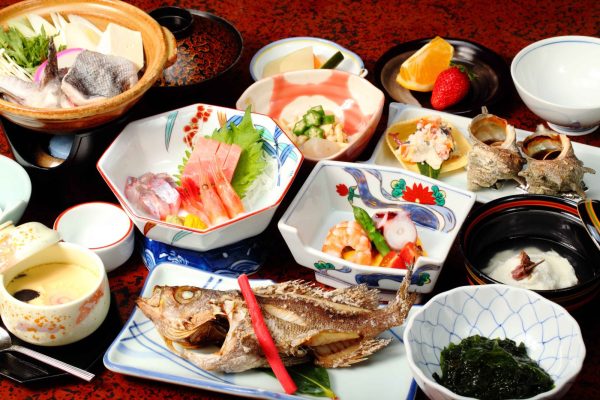
Oga Onsen Village
For the most relaxing experience, spend the night in Oga Onsen Village.
After a day of exploring the coast, soaking in a hot spring before enjoying a seafood dinner is the perfect introduction to Akita's hospitality.
If you're looking for a more luxurious stay with ocean views, Yamado Oga offers a peaceful retreat overlooking the Sea of Japan.
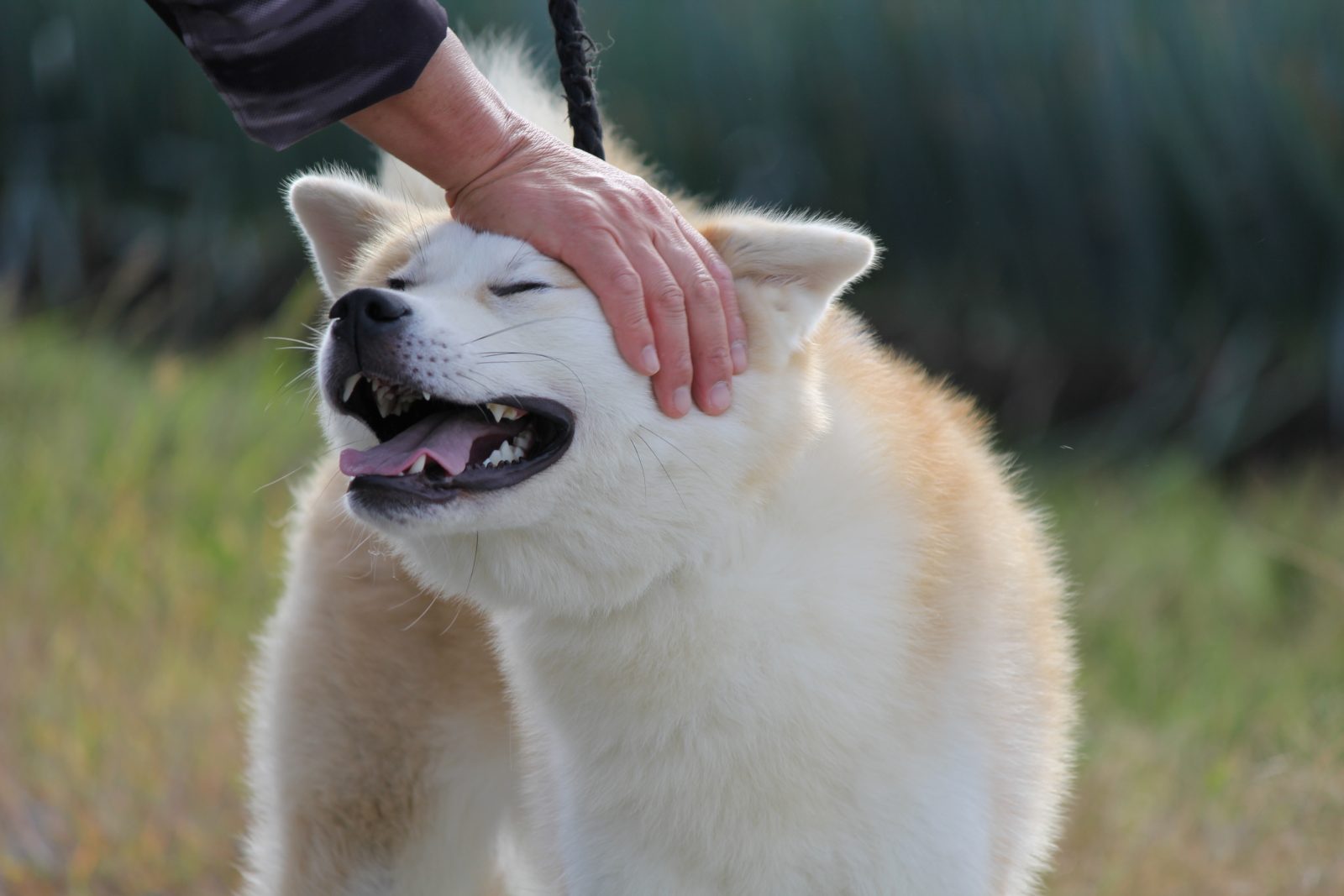
DAY 2 | Harvest Junsai, Meet Akita Dogs, and Discover the Timber Heritage of Noshiro
Spend the day experiencing the traditions that make northern Akita unique—from harvesting an ingredient served in fine Japanese cuisine to meeting one of Japan's most beloved dog breeds and exploring a city built on the beauty of Akita cedar.
Today's Drive
| Route | Oga Onsen → Mitane Town → Noshiro
| Total Driving Time | About 1 hour
| Driving Difficulty | Easy
| Highlights | Junsai Harvest • Local Cuisine • Akita Dogs • Historic Architecture
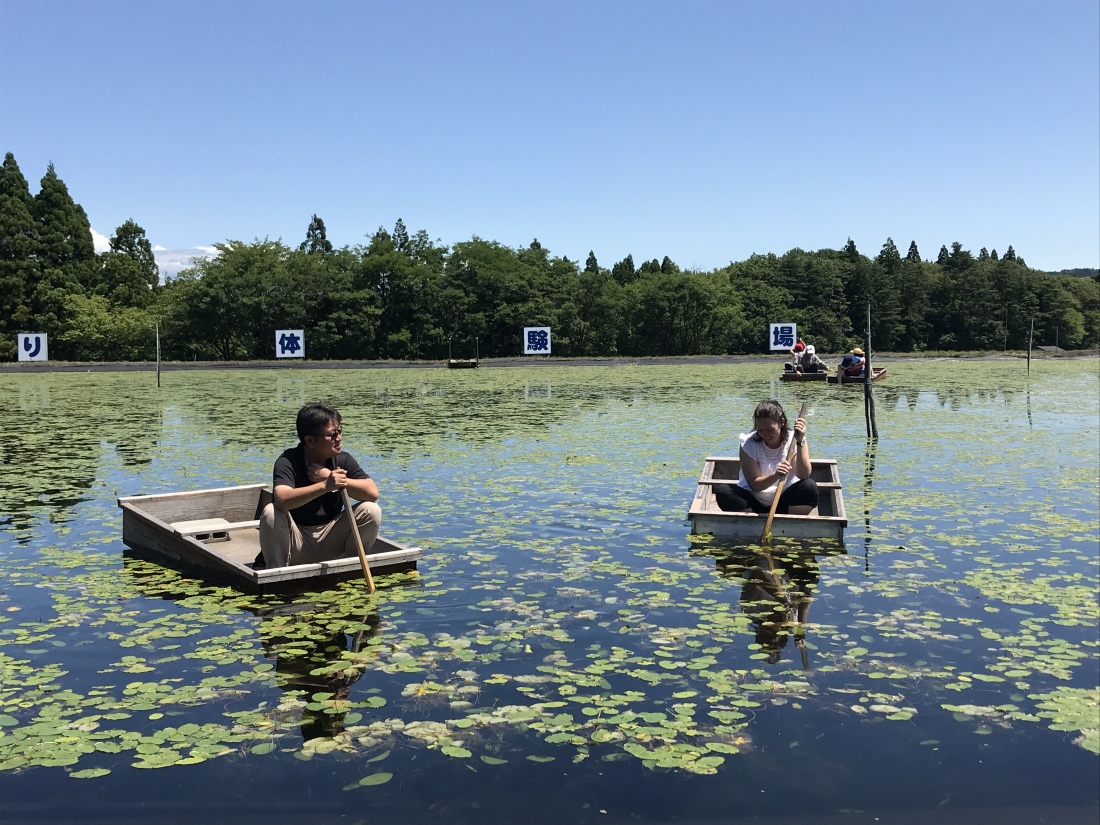
Leaving Oga Behind
Wake up to a relaxing morning in Oga Onsen before continuing your journey north.
The drive follows the Sea of Japan for much of the morning, with coastal scenery gradually giving way to rice fields, wetlands, and peaceful farming villages. It's a leisurely route that reveals another side of Akita—one shaped by agriculture, freshwater lakes, and everyday rural life.
Around 40 minutes later, you'll arrive in Mitane Town, one of Japan's leading producers of junsai.
Experience Junsai Harvesting
For many international travelers, junsai is something they've never heard of before.
This delicate aquatic vegetable has long been enjoyed in traditional Japanese cuisine, particularly in refined kaiseki meals. Its smooth, naturally gelatinous texture makes it unlike almost anything else you'll taste in Japan.
Mitane Town is one of the country's best-known production areas, making it one of the few places where visitors can experience harvesting junsai themselves.
You'll board a small wooden boat and gently move through shallow ponds, carefully picking the young leaves by hand. The water is only about 50 centimeters deep, creating a surprisingly peaceful and relaxing experience.
It's less about speed and more about slowing down and appreciating the rhythm of local life.
Experience Junsai Harvesting
Season | May–August
Duration | 1–3 hours
Reservation | Advance reservation required by email.
Optional Lunch Experience
One of the highlights of the junsai experience is tasting what you've just harvested.
If you've booked the cooking option, your freshly picked junsai can be prepared at a nearby restaurant inside Moritake Onsen Hotel. Enjoying it only moments after harvest offers a rare opportunity to experience one of Japan's seasonal delicacies at its freshest.
If you prefer other local specialties, Mitane also has several excellent lunch options.
・Pieno di Sole MITANE – Wood-fired pizza made with local ingredients
・Moritake Onsen Hotel – Japanese set meals and seasonal dishes
・Roadside Station Kotooka – Casual local meals and regional products
・Sakuratei Shokudo – Known for its horse meat dishes
Walk with an Akita Dog
Few animals are as closely associated with Japan as the Akita Inu.
In Mitane Town, visitors can join a guided walk alongside Masa, a friendly Akita dog who has become something of a local celebrity.
Instead of simply taking photos, this experience allows you to spend meaningful time walking through forests and countryside together with your guide and canine companion.
It's a gentle, relaxing activity that combines beautiful scenery with one of Japan's most iconic breeds.
For travelers looking for a deeper cultural experience, there's also a tour that combines the walk with making miso-tanpo, a traditional Akita comfort food made from mashed rice grilled over charcoal.
Walk with an Akita Dog
Booking | Available through KKDAY and Activity Japan
Starting Time | 9:30 AM
Miso-Tanpo Course | 9:00 AM
Pickup | JR Kado Station pickup available when booking.
Continue to Noshiro
After lunch, continue north for about twenty minutes.
Although Noshiro is often overlooked by international visitors, it has played an important role in Akita's history for centuries.
Known as the "City of Wood," Noshiro prospered through the timber industry thanks to the abundant forests of Akita cedar. Even today, beautiful wooden architecture remains one of the city's defining characteristics.
At the same time, Noshiro is famous throughout Japan for two completely different reasons: basketball and Akita dogs.

Why Visit Noshiro?
Historic Akita cedar architecture
Basketball culture
Akita dog experiences
Fresh seafood and local cuisine
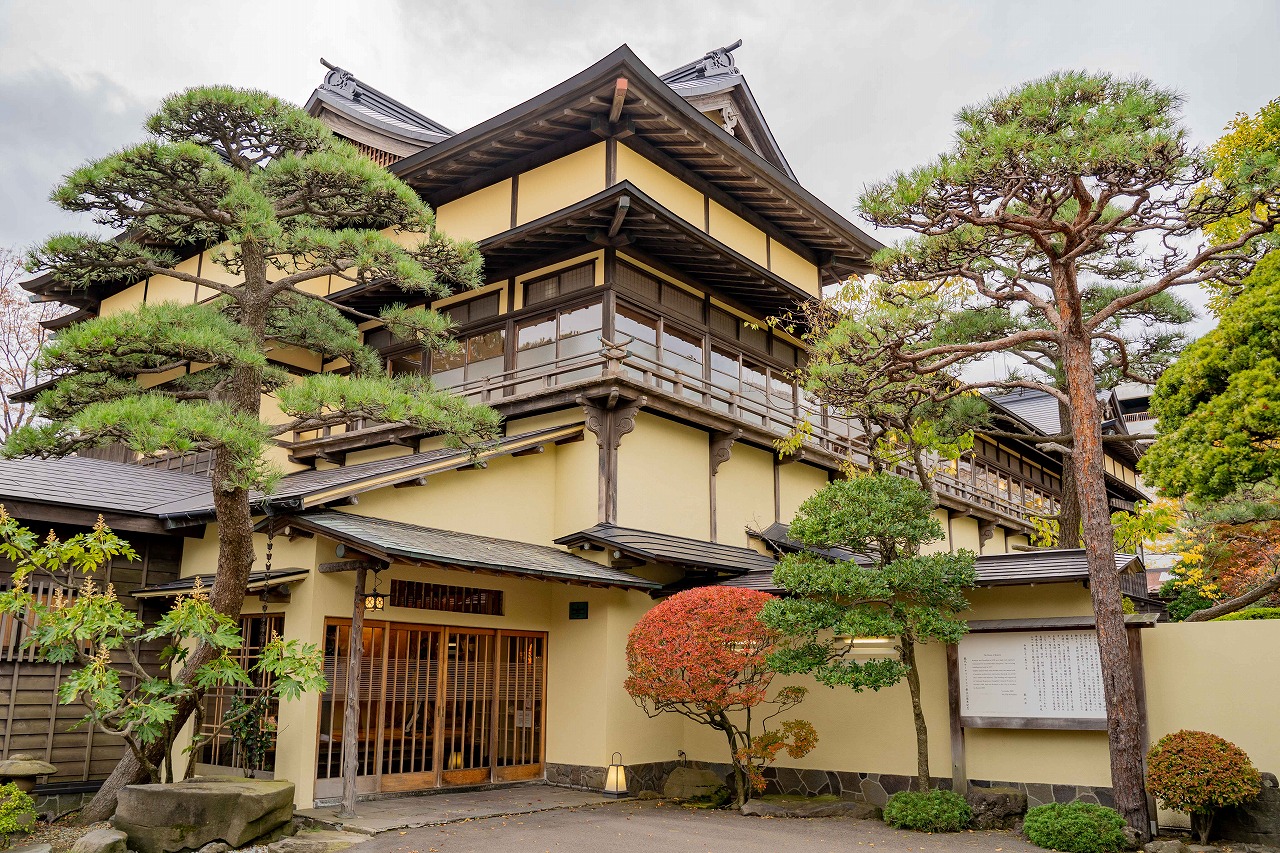
Former Ryotei Kaneyu
If there's one building that best represents Noshiro's timber heritage, it's Former Ryotei Kaneyu.
Originally built as an exclusive traditional restaurant for distinguished guests, the building is now open to the public free of charge.
Inside, you'll find magnificent interiors crafted almost entirely from Akita cedar. Every room showcases the craftsmanship that once made Noshiro one of Japan's most important timber cities.
Even if you simply explore the building on your own, it's one of the finest places to appreciate the beauty of Akita cedar architecture.
Former Ryotei Kaneyu
Visitors who wish to immerse themselves further in Japanese culture can also reserve additional experiences such as:
・Kimono dressing
・Akita Maiko performances
・Kumiko woodworking workshops
・Traditional dining experiences
Noshiro Basketball Museum
Basketball might not be the first thing that comes to mind when thinking about rural Japan—but in Noshiro, it's part of the city's identity.
The museum traces the history of basketball in Noshiro through trophies, historic photographs, and memorabilia celebrating decades of success.
Fans of the manga and anime Slam Dunk may also recognize Noshiro's connection to Sanno High School, widely believed to have been inspired by Noshiro Technical High School.
Whether you're a basketball fan or simply curious about one of Japan's most unexpected sporting stories, the museum offers an interesting glimpse into local culture.
Admission is free.
Meet Akita Dogs at Kojuso Kennel
No visit to Noshiro would be complete without meeting Akita dogs up close.
Kojuso Kennel is one of the best-known Akita kennels in Japan and has raised numerous champion dogs over the years. It is also known for raising Masaru, the Akita presented to Olympic figure skating champion Alina Zagitova.
Around ten Akita dogs live at the kennel, giving visitors the chance to meet dogs with a variety of coat colors and personalities.
Unlike a tourist attraction or petting zoo, Kojuso is a working private kennel. Visits are therefore available by advance reservation only, arranged through the kennel's Instagram account.
For dog lovers, this is one of the most memorable experiences in northern Akita.
Meet Akita Dogs at Kojuso Kennel
Akita Dog Meet & Greet
-¥2,000 per person
Akita Dog Walking Experience
-¥3,000 per person
*Advance reservation required.
Dinner in Noshiro
After a full day of exploring, settle into Noshiro for the evening.
The region sits at the foot of Shirakami Sanchi, where pristine water, fertile farmland, and the Sea of Japan come together to produce exceptional local ingredients.
This is an excellent opportunity to enjoy regional specialties such as:
・Kiritanpo
・Fresh seafood
・Local sake brewed with water from the Shirakami region
Whether you choose a lively izakaya or a traditional sushi restaurant, dinner in Noshiro offers a fitting introduction to Akita's rich food culture.
Where to Stay
Noshiro offers accommodation for a variety of travel styles.
Business hotels provide convenient access to restaurants and the city's attractions, while accommodations closer to the coast offer a quieter stay near the Sea of Japan.
Whichever you choose, spending the night here makes for an easy start to tomorrow's journey into the forests surrounding Shirakami Sanchi.
DAY 3 | Ancient Beech Forests, Hidden Lakes, and a Sunset Onsen by the Sea
Your final day takes you into the foothills of Shirakami Sanchi, where centuries-old beech forests, crystal-clear lakes, and the dramatic coastline of the Sea of Japan come together to create one of northern Japan's most unforgettable landscapes.
Today's Drive
| Route | Noshiro → Happo → Juniko → Furofushi Onsen
| Total Driving Time | About 1.5 hours
| Driving Difficulty | Easy
| Highlights | Ancient Beech Forest • Juniko Lakes • Blue Pond • Sunset Onsen
Welcome to the Foothills of Shirakami Sanchi
Leave Noshiro after breakfast and continue north toward Happo Town.
Although many visitors head directly to Juniko Lakes, slowing down here reveals another side of Shirakami Sanchi—one of quiet fishing villages, forest trails, waterfalls, and peaceful coastal scenery.
It's the perfect place to experience rural Japan at an unhurried pace.
Walk Through Tomeyama's Ancient Beech Forest
If you're hoping to experience the primeval forests of Shirakami Sanchi without a strenuous mountain hike, Tomeyama is one of the region's hidden treasures.
Protected for its ecological importance, this beautiful beech forest has remained largely untouched for centuries. Walking beneath its towering trees, you'll hear little more than birdsong, rustling leaves, and the gentle sounds of nature.
Because Tomeyama is located within a protected area, entry is only possible with an authorized local guide. Advance reservations are required through the Happo Tourism Association.
This guided walk offers a rare opportunity to experience the quiet beauty that earned Shirakami Sanchi its UNESCO World Natural Heritage status.
Travel Tips
Duration
-Approximately 2 hours
Reservation
-Advance booking required
Guide
-Local guide accompanies all tours
Explore Happo's Hidden Gems
If you'd rather enjoy a more relaxed morning, Happo Town offers several lesser-known attractions worth exploring.
Take a walk through the picturesque Sanjugama Gorge, soak in the seaside baths of Hachimori Isaribi Onsen Hatahata-kan, or visit Shirataki Shrine, one of Japan's few shrines featuring a waterfall within its grounds.
For panoramic views of the Sea of Japan, stop by Kanoura Observatory, while travelers looking for a quiet café break can enjoy locally roasted coffee and homemade desserts at Labo and Cafe YAMAMOTO.
For those who prefer a guided experience, local tours combine visits to scenic viewpoints with traditional soba-making workshops.
Lunch in Happo
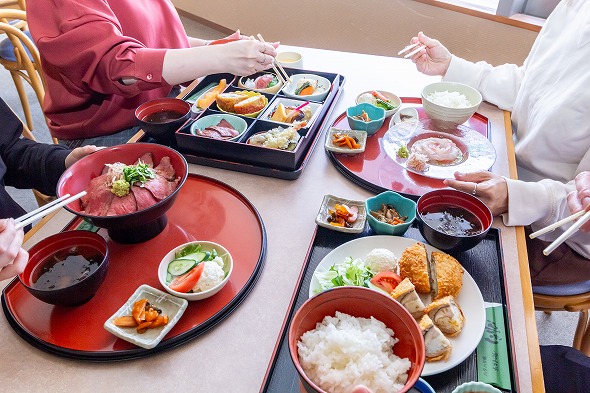
Happo's restaurants focus on simple, satisfying local cuisine.
Whether you're craving Japanese curry, fresh seafood, or a traditional set meal, this is a good opportunity to enjoy lunch before entering the forests surrounding Juniko.
Roadside stations are also excellent places to purchase local specialties and souvenirs.

Continue Along the Sea of Japan
The drive from Happo to Juniko is one of the most scenic sections of the entire itinerary.
For much of the journey, the Sea of Japan stretches endlessly beside the road while the mountains of Shirakami Sanchi rise in the distance.
Railway enthusiasts may wish to stop near Koirikawa Bridge, where the Resort Shirakami sightseeing train occasionally passes between the mountains and the sea—one of the most photographed railway scenes in northern Japan.
Arriving at Juniko Lakes
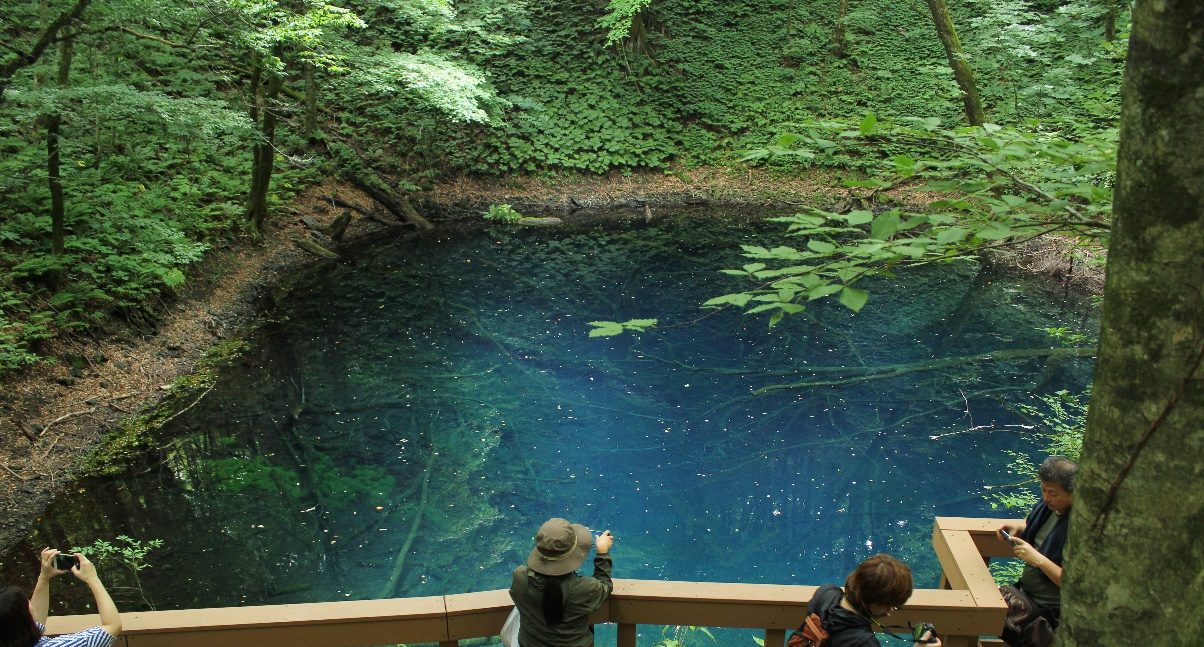
Most visitors know Juniko for its famous Blue Pond, Aoike, but the area is much more than a single lake.
Scattered throughout the forest are 33 tranquil lakes and ponds, each with its own character and surrounded by pristine beech woodland.
The name Juniko, meaning "Twelve Lakes," dates back centuries, when only twelve of the lakes could be seen from nearby Mount Kuzure.
Today, it remains one of the most accessible ways to experience the natural beauty surrounding Shirakami Sanchi.
Don't Just Visit Aoike Pond
Aoike Pond deserves its reputation.
Its striking cobalt-blue water changes color throughout the day depending on sunlight and weather, making every visit slightly different.
Yet many travelers leave immediately after taking a few photographs.
That would be a mistake.
The true beauty of Juniko lies in slowing down.
Continue beyond Blue Pond and you'll discover peaceful forest paths leading to lakes such as Ketoba-no-Ike, Wakitsubo-no-Ike, Nagaike, and Kanayama-no-Ike.
With every step, the crowds begin to disappear, replaced by birdsong, flowing springs, and the quiet atmosphere of one of Japan's most beautiful natural landscapes.
This is where Juniko reveals its true character.
Juniko Lakes
・Wear comfortable walking shoes.
・Some trails may become muddy after heavy rain.
・Trail conditions occasionally change, so check the latest information before your visit.
End Your Journey at Furofushi Onsen
As evening approaches, continue west toward one of northern Japan's most iconic hot springs.
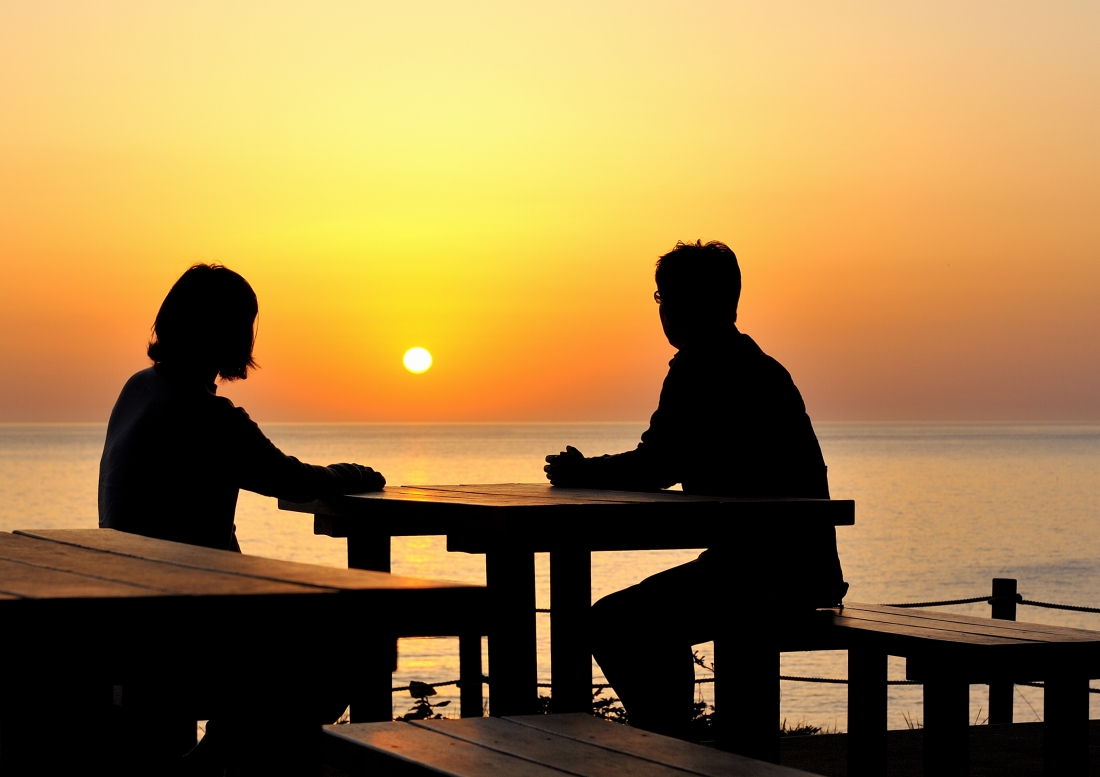
Perched beside the Sea of Japan, Furofushi Onsen is famous for its open-air baths overlooking the ocean.
On clear evenings, you can soak in the mineral-rich waters while watching the sun slowly disappear beyond the horizon.
It's an experience that perfectly captures the spirit of this road trip—unhurried, peaceful, and deeply connected to nature.
Even if you're staying elsewhere that night, it's well worth stopping for a relaxing bath before continuing your journey.
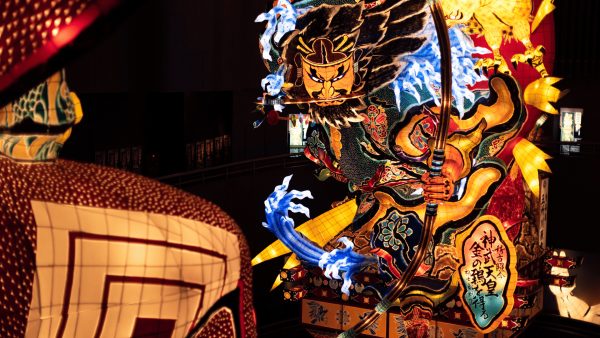
Continue Your Journey to Aomori
Although this itinerary officially ends here, your adventure through northern Japan doesn't have to.
From Juniko, it's easy to continue north into Aomori Prefecture, where new landscapes and historic towns await.
Visit the elegant castle town of Hirosaki, admire the iconic silhouette of Mount Iwaki, or continue to Aomori City to discover museums, local seafood, and the vibrant culture of Japan's northernmost main island.
Together, Akita and Aomori offer one of Japan's most rewarding road trips—one that combines dramatic coastlines, ancient forests, traditional culture, and unforgettable local hospitality.
Whether you came for the hydrangeas, the forests, or simply the joy of exploring somewhere different, we hope this journey leaves you with lasting memories—and perhaps the inspiration to return to northern Japan once again.