


From Circuit Boards to Lanterns
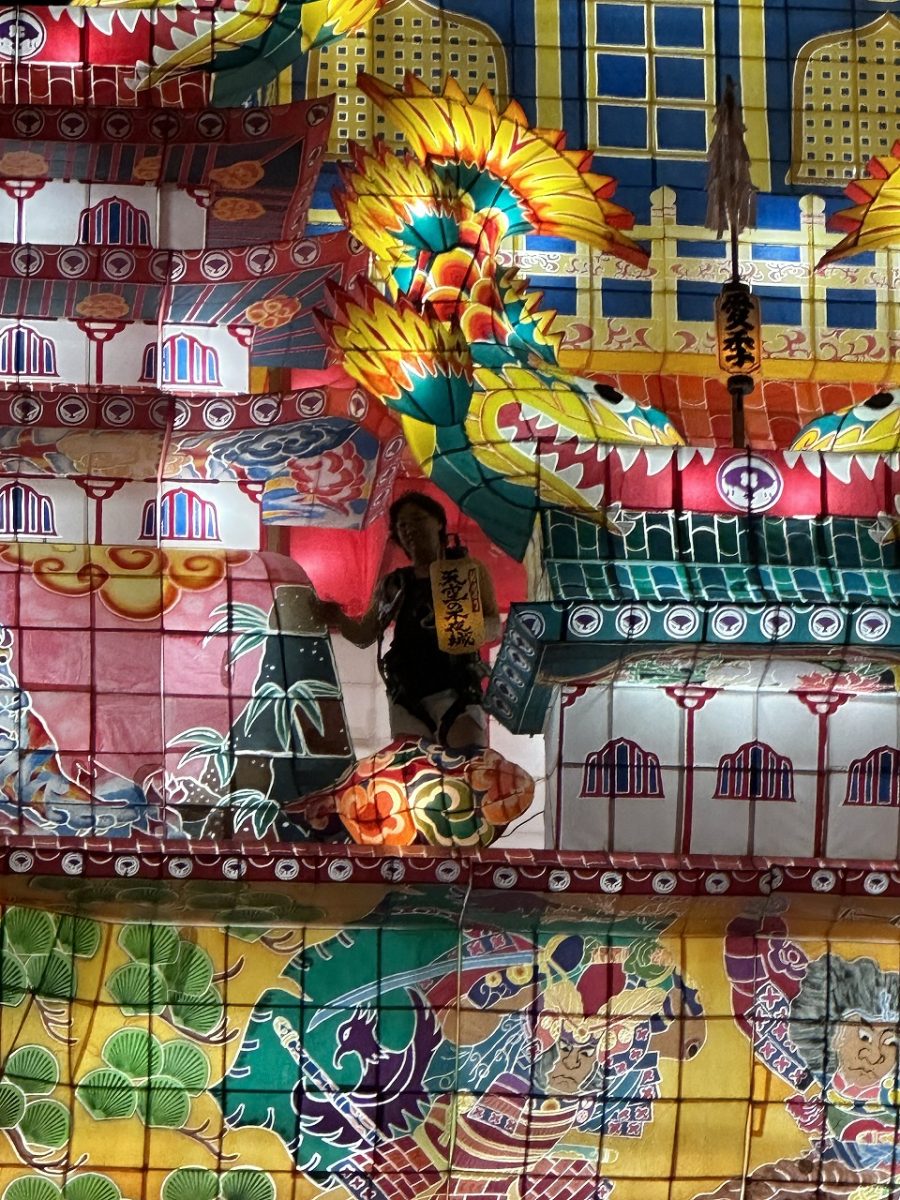
Kojima-san began his career at Okubo Seisakusho, where he worked on electrical programming and the development of electronic devices. His work included LCD technology used in products such as G-SHOCK watches. Outside work, he was passionate about cameras and also worked as a photographer, developing a strong eye for detail and an instinct for turning an image into something tangible.
Then, in 2012, he made an unexpected decision. He left his job to devote himself to a project with a very different purpose: bringing Noshiro’s giant lantern tradition back to life. Tenku no Fuyajo debuted the following year.
More than a decade later, Kojima-san is still drawing, building, repairing and refining the lanterns that form the centrepiece of this spectacular summer festival in Noshiro, Akita.
The connection between his former career and his work today may not be as distant as it first appears. Both begin with the same question:
How can an idea become something real?
For his first Tenku no Fuyajo lantern, the answer began with just three old photographs.
Bringing a Lost Tradition Back to Life

Rebuilding What No Longer Existed
How do you rebuild something that no longer exists?
For Kojima-san, that was the challenge when the Tenku no Fuyajo project began. Noshiro once had giant lanterns as part of its Tanabata tradition, but the original lanterns were long gone and there were no detailed blueprints to work from. The team had just three old photographs showing what the lanterns had looked like.
That was all they had.
Fortunately, Kojima-san was no stranger to Noshiro’s traditional lanterns. He had already been involved in making lanterns for Yaku Tanabata, one of the city’s long-standing festivals, and he had always enjoyed creating something new. So the challenge was not simply to reproduce an old lantern, but to work out how that lantern could actually be built again.
The first lantern was named Karoku. Using the old photographs as a guide, Kojima-san began drawing the design himself. There was no existing blueprint to follow; he had to study the photographs, interpret the details and work out how to turn a two-dimensional image into a three-dimensional structure.
A New Life for an Old Tradition
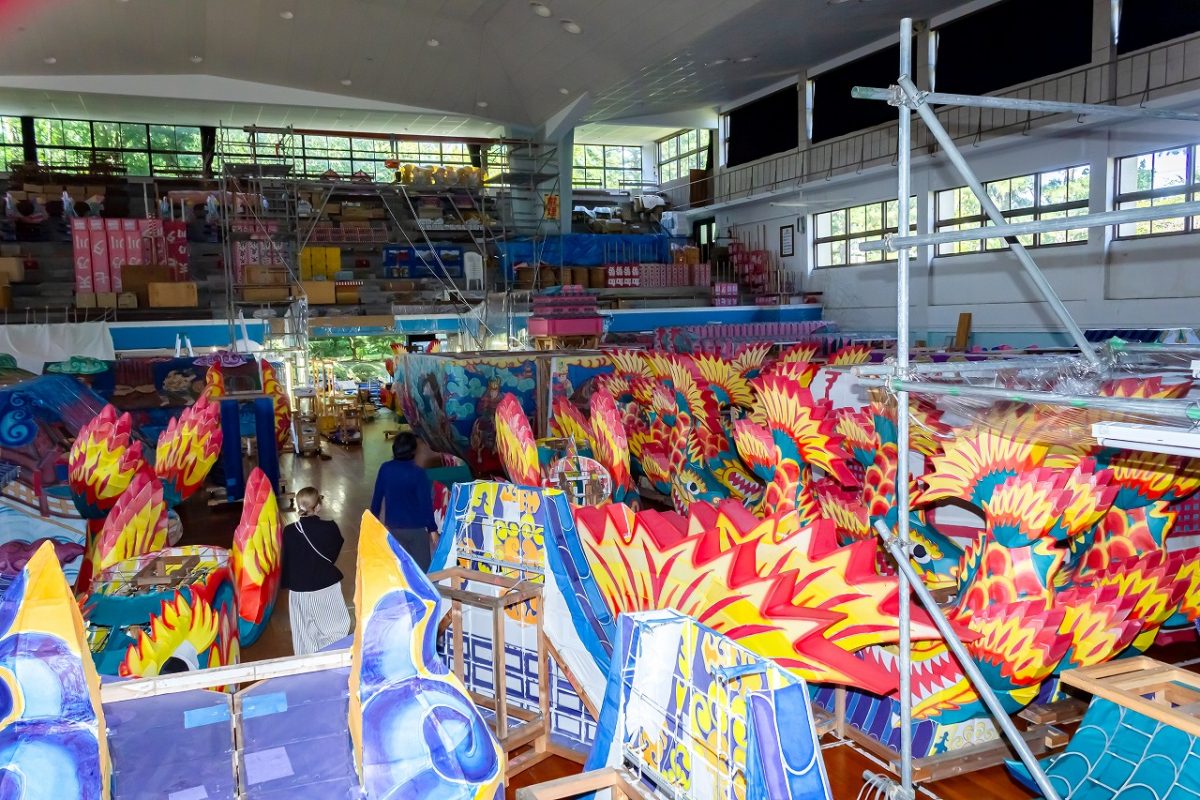
There was one more constraint: time. Kojima-san had just six months to complete the first giant lantern, designing and building it at the same time. As the plans took shape, so did the lantern itself.
It was an ambitious beginning for a project that would eventually produce one of Japan’s tallest castle shaped lanterns. But Kojima-san was not trying to recreate the past simply for the sake of nostalgia.
The project had a bigger purpose. Noshiro wanted to bring new energy to the city and attract people with something uniquely its own. The idea was to create a festival rooted in Noshiro’s own history and traditions, drawing on the city’s Tanabata tradition and its history of giant lanterns.
The project set out to bring that forgotten tradition back—and give it a new life.
And then came an even bigger question: How high could they go?
How Do You Build a 24.1-Meter Lantern?
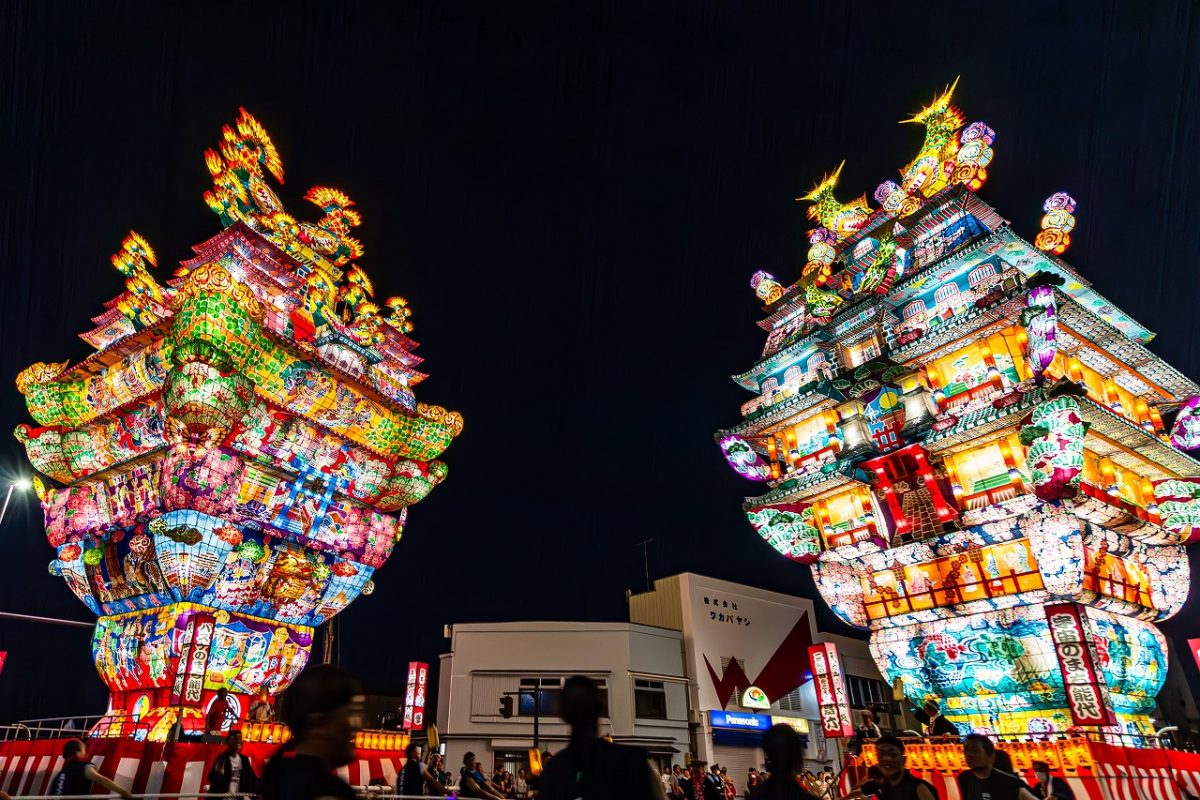
There are two giant lanterns at Tenku no Fuyajo: Karoku and Chikasue.
In 2014, Kojima-san set out to build an even taller lantern than Karoku. The goal was to exceed 23.5 meters and create Japan’s tallest castle shaped lantern. Construction began in January, and as the work progressed, the planned height grew until it eventually reached 24.1 meters.
That 24.1-meter height belongs to Chikasue. Karoku is not 24 meters tall, but it is still an enormous lantern.
Making lanterns this tall is about much more than simply building upward.
From Drawing to Structure
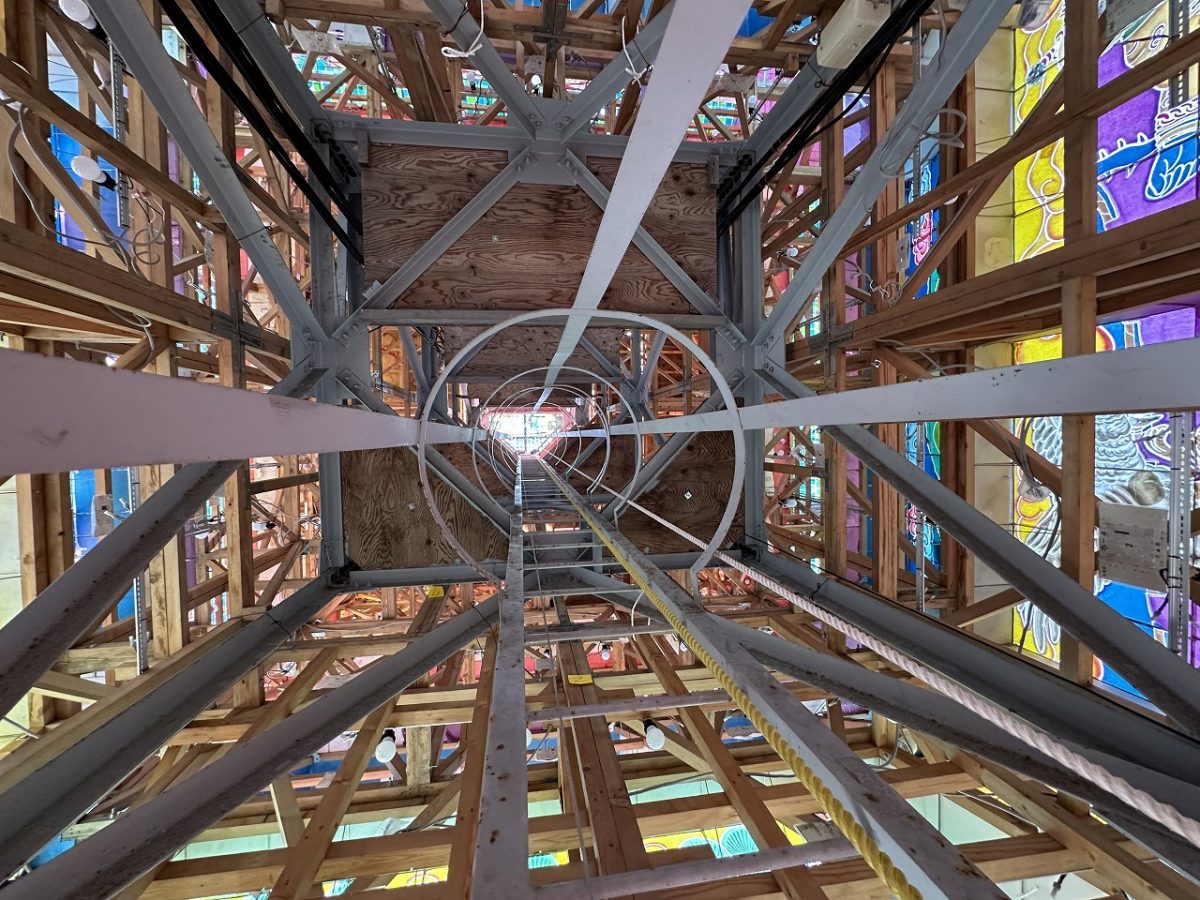
The process begins with a drawing of the lantern’s exterior. Before construction starts, the design must also take into account the forces that a 24.1-meter structure will face. Wind speed, the lantern’s movement and its stability all have to be considered. The safety engineering for the structure is handled separately, while the main frame and wheeled base are professionally constructed.
Then comes the part that Kojima-san knows best: making the lantern itself. Wood and wire are used to build the structure and give the lantern its shape, piece by piece, around the frame.
It may look effortless when the finished lanterns glide through the streets at night, but there is a remarkable amount of planning hidden beneath their illuminated surfaces.
Keeping a Giant Lantern Alive
The lanterns are not built completely from scratch every year. Instead, Kojima-san and the team spend around six months repairing and preparing each of the two giant lanterns, Karoku and Chikasue. In total, that means roughly a year of work between the two.
And that is only part of their workload. Kojima-san also work on many other lanterns, keeping him busy throughout the year. As the August festival approaches, every part of the giant lanterns is inspected, repaired or renewed as needed before they return to the streets.
For Kojima-san, this is not simply a maintenance job. There is always something to make, fix or improve.
But the two lanterns are more than impressive structures. Each one tells a story—and the stories behind them are very different.
One Remembers. One Reimagines.
At first glance, Karoku and Chikasue may look like two versions of the same giant lantern. But they were created with very different ideas in mind.
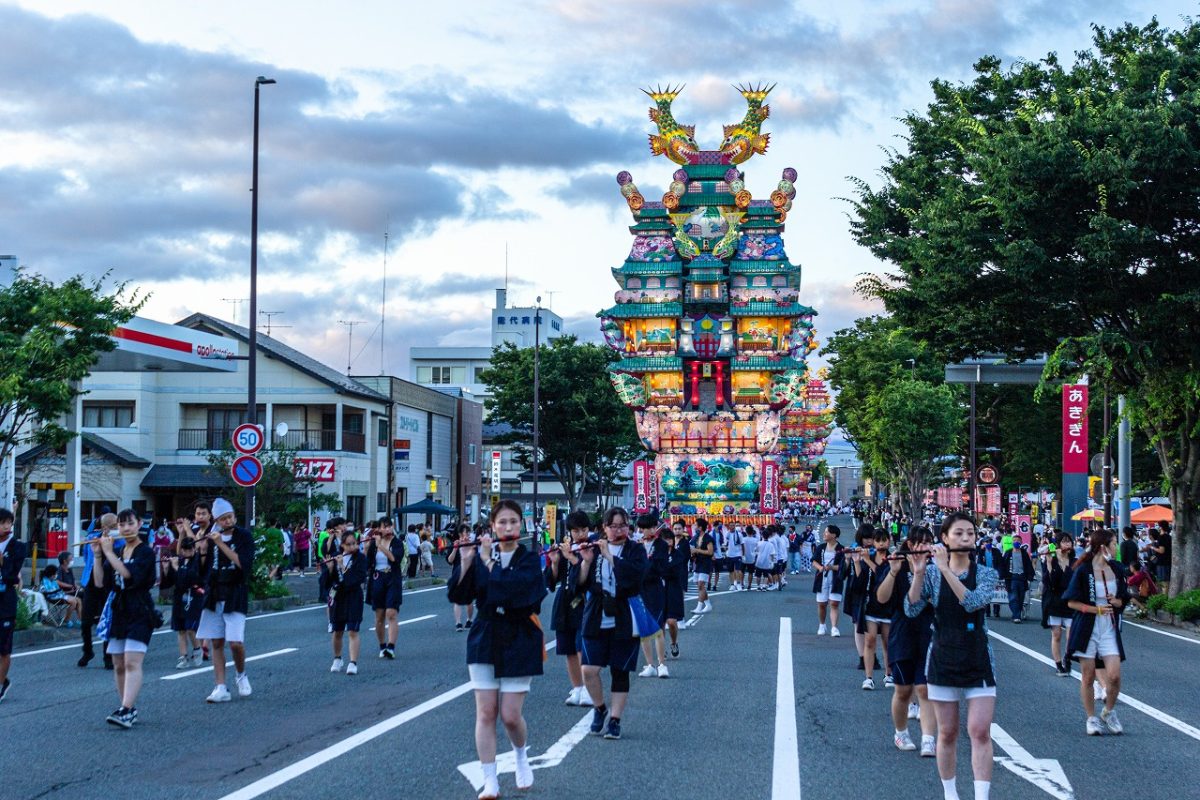
Karoku: Recreating the Past
Karoku was the first lantern Kojima-san created for Tenku no Fuyajo. With only three old photographs to work from, his goal was to recreate the lantern as faithfully as possible.
That attention to detail can be seen throughout the lantern. Look closely and you will find intricately recreated stone lanterns, fences and torii gates. The design reflects the details captured in the historical photographs, giving visitors a glimpse of what Noshiro’s giant lanterns once looked like.
For Kojima-san, these details are more than decoration. They are clues to a tradition that had disappeared from the streets of Noshiro.
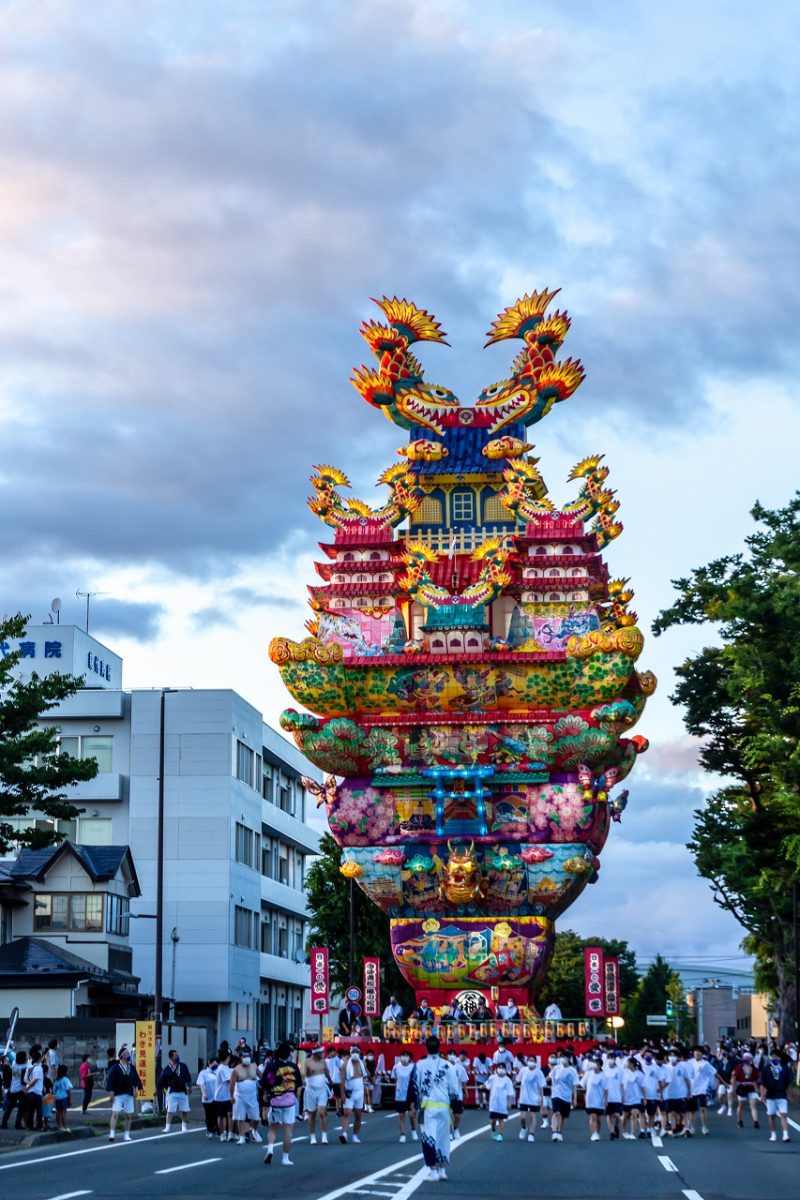
Chikasue: Turning History into a Story
Chikasue took a different approach. Rather than recreating an old lantern, Kojima-san wanted to create something new that was rooted in Noshiro’s history.
The process began with a question:
Who represents Noshiro’s history?
His search led him to Ando Chikasue, a powerful lord of the Sengoku period who played an important role in the history of northern Japan. Kojima-san read historical books and visited Hiyama to learn more about Chikasue and the world in which he lived.
From that research, he developed the story depicted on the lantern and created the original artwork himself. The result is more than a giant illuminated structure. Chikasue becomes a moving history book—one that tells a story through images as it travels through the streets of Noshiro.
So when you visit Tenku no Fuyajo, don’t just look up at the height. Take a closer look at what each lantern is telling you.
Karoku brings the past back to life. Chikasue turns history into a new story.
Made by Hand, Driven by Passion
Building a 24.1-meter lantern sounds like the kind of job that comes with a long list of difficulties. But when asked if there was ever a moment when he thought, This might be impossible, Kojima-san’s answer was simple:
“Not really.”
He is often still working right up until the festival begins. Even this year, the lanterns were being worked on right up to the day of the festival. But rather than seeing the tight schedule as a burden, Kojima-san sees it differently.
He enjoys making things.
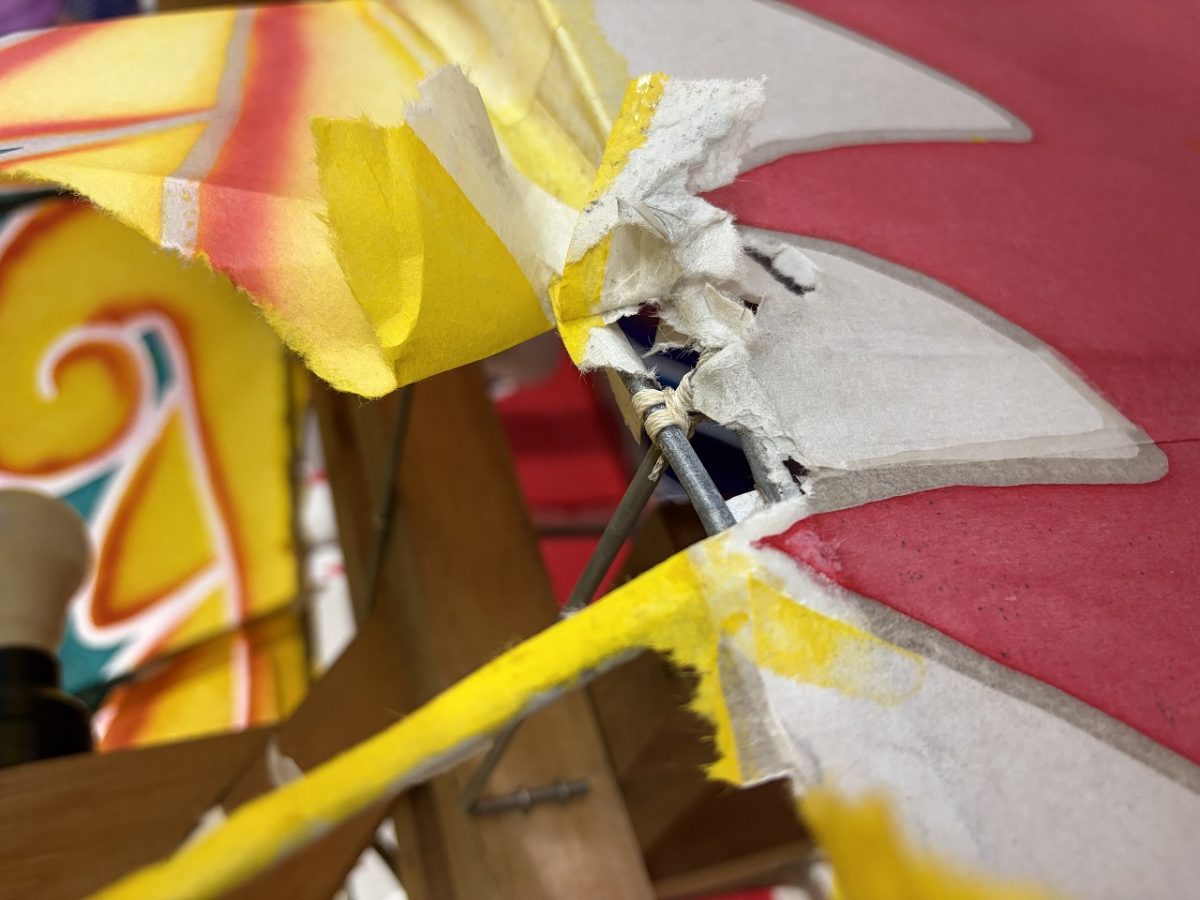
The Devil Is in the Details
Perhaps nowhere is that attitude more visible than in the shachi. The shachi is one of the most intricate parts of the lantern, and creating it requires careful work. For Kojima-san, however, it is also one of the most enjoyable parts of the process.
His experience extends beyond Tenku no Fuyajo. The shachi on the lanterns used for Yaku Tanabata are redesigned every year, giving him an opportunity to create something different each time. There is also a fascinating difference in how they are made.
Unlike the giant lanterns of Tenku no Fuyajo, the Yaku Tanabata lanterns are eventually burned and floated down the river as part of the festival. Because of this, bamboo rather than wire is used to create their shachi. The bamboo is heated and carefully bent into shape.
It is a different process from building a 24.1-meter lantern, but the principle is the same: take a material, shape it by hand and turn an idea into something real.
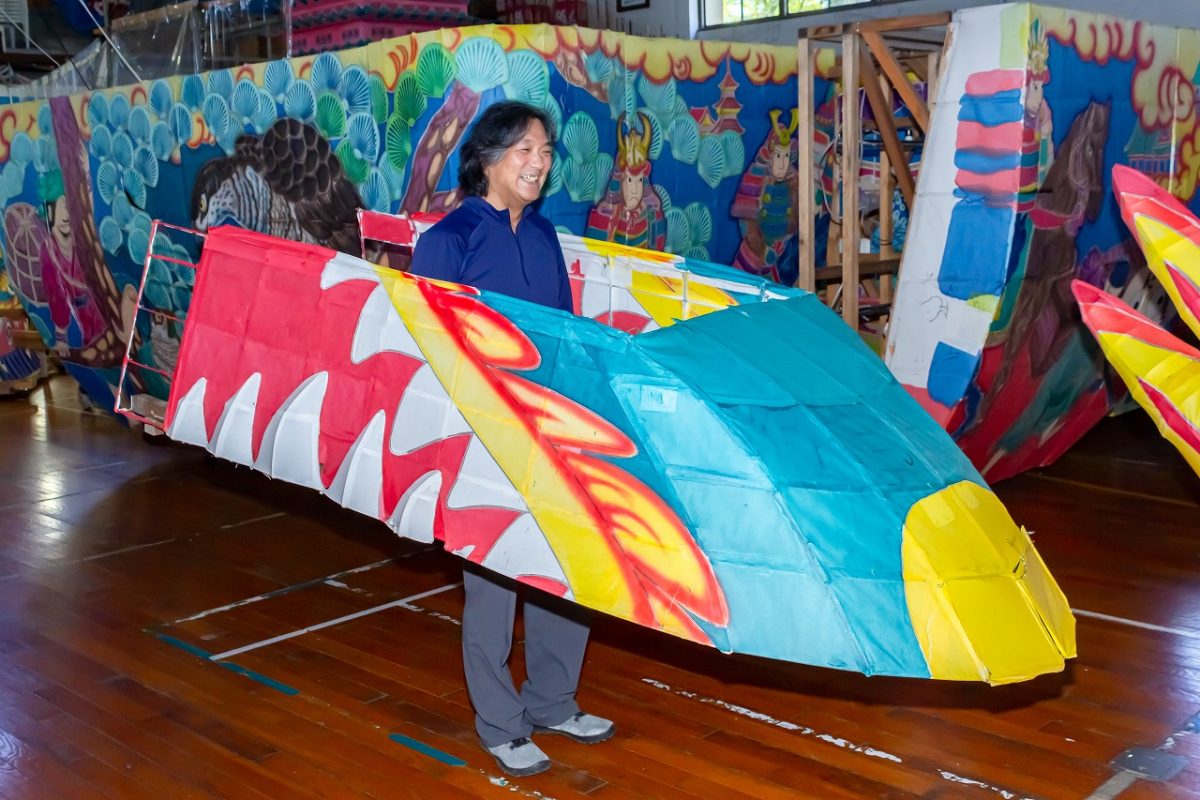
When the Lanterns Come Alive
For Kojima-san, the making itself is part of the joy of Tenku no Fuyajo. There is always another detail to work on, another idea to try or another part to improve. He keeps working until the very last moment because, as he puts it, making things is fun.
Then comes the moment when all that work leaves the workshop.
The lanterns are lit and begin to move through the streets as people gather to watch them pass. For months, Kojima-san has been focused on wood, wire, drawings and repairs. On festival night, all of that work becomes something shared by the entire city.
That transformation—from something made by hand to something experienced by the community—is at the heart of what makes Tenku no Fuyajo special.
Keeping the Lanterns Moving

A Festival for the Next Generation
For Kojima-san, Tenku no Fuyajo is not simply a festival to be preserved. He wants it to keep evolving.
His vision is for a festival that people can take part in, rather than one they simply stand and watch. In the future, he would like visitors to be able to put on a happi coat, join the festival and experience the excitement alongside the local community.
Keeping the festival alive for the next 10 or 20 years, however, will take more than giant lanterns. It will take people, new ideas and a willingness to keep the festival changing.
Most importantly, the next generation needs to know why the festival exists and what it means to the community.
That work has already begun. Local children learn traditional performing arts, with elementary school students learning dengaku lantern and junior high school students practicing flute and taiko. Through these experiences, the festival becomes something they participate in—not simply something they watch.
For Kojima-san, that is how a tradition can continue.
Come and Feel the Festival
After more than a decade of building giant lanterns, Kojima-san’s passion remains remarkably simple: he likes making things. Every August, however, what he makes becomes part of something much bigger as the lanterns leave the workshop and fill the streets of Noshiro.
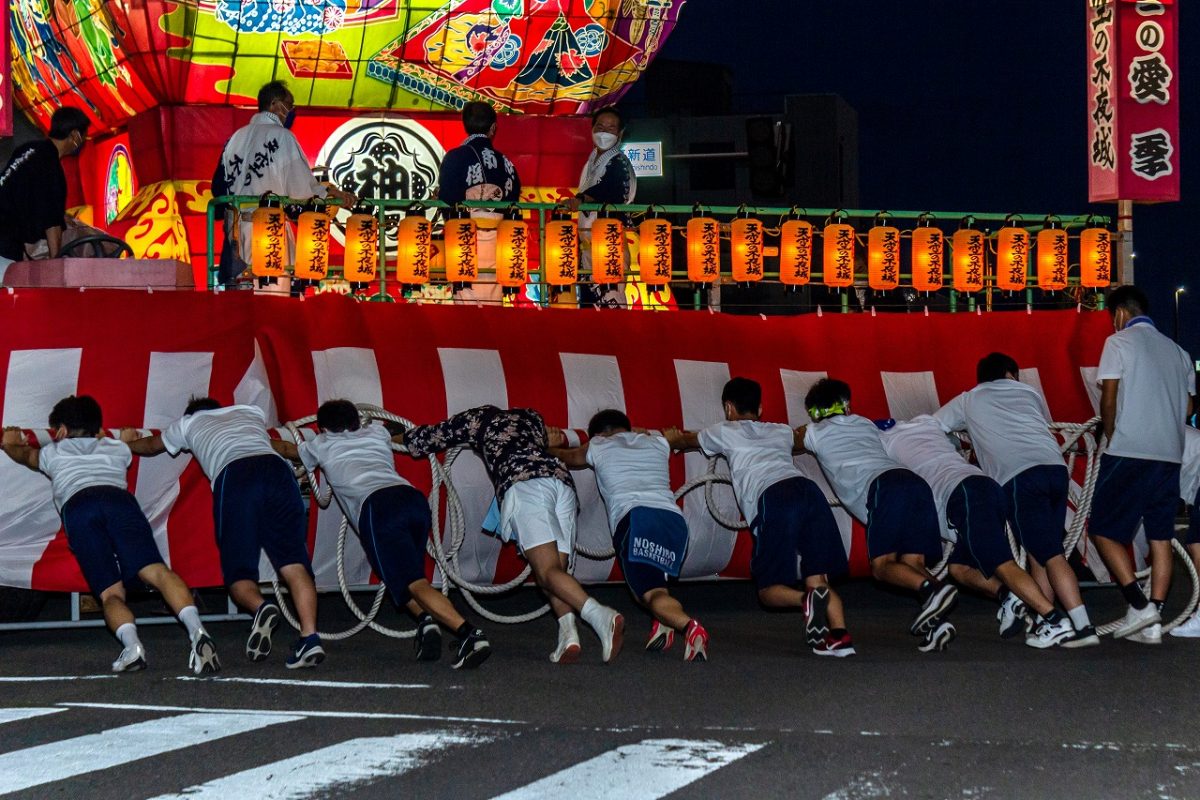
Imagine standing among the crowd as one of the towering lanterns emerges into the summer night. Its enormous form rises above the rooftops, hundreds of lights glow across its surface, and drums and flutes fill the air. Then, with the strength of the people pulling and pushing below, the lantern begins to move.
It moves by human power alone—driven by strength, teamwork and a tradition brought back to life.
“I want people to come and see these giant lanterns being moved by human power.”
Come to Noshiro in August and experience it for yourself—not simply as a spectacle to watch, but as a living festival shaped by the people who build it, move it and carry it into the future.

Kojima-san’s Shirakami Favorites
When he is not making giant lanterns, Kojima-san has his own favorite ways to enjoy the area.
Favorite activity:
Canoeing down the Yoneshiro River
Favorite spot:
Omagoshi Campground
Favorite festival:
Sansa Festival
Must-try local dish:
Yakitori at Izakaya Kimagure
Favorite souvenirs:
Kinman and Sekito Shinko Mochi
These are the places, food and experiences that make up his own connection to the region.